5 YouTube Metrics Every Brand Needs to Know
Navigating YouTube in 2026 means understanding what the algorithm is actually looking for, and the good news is, it's more straightforward than you might think. At its core, YouTube wants to recommend content that keeps people watching, engaged, and coming back for more. For brands, this means that knowing which metrics to track isn't just useful, it's essential. For brands, this means that knowing which YouTube performance metrics to track to understand success.
In this article, we're breaking down the five key YouTube metrics your brand needs to know to give your content the best chance of being seen. Whether you're just starting out on the platform or looking to refine your existing strategy, getting familiar with these metrics will help you make smarter, more informed decisions about your content. And ultimately, help you grow.
YouTube Action Rate
The first YouTube metric you should know about is Action Rate; Action Rate is based on the likes, comments, and shares your videos get, indicating a positive response to the content.
Action Rate is measured by the total engagements (such as likes,comments, shares, and subscribes) divided by the number of total views, then times this by 100. Your action rate measures how valuable and engaging viewers found your content and therefore the likelihood your video will be pushed out to larger audiences.
On average a good action rate is between 3-7% with 10% being exceptional, but working towards large figures like this means cultivating a positive community of viewers that regularly enjoy your content.
Why is Action Rate important on YouTube?
This YouTube metric is important to consider because it can be seen in business terms as the ‘viewer satisfaction’ level. Engagement is key in growing your audience so consistently producing content that viewers engage positively with will boost your value in the eyes of the algorithm.
For your videos to gain traction and be recommended to wider audiences, the key is giving viewers a reason to keep coming back. YouTube evaluates this through long-term engagement signals, such as whether viewers return to your channel, explore more of your content after watching, and consistently interact with your videos over time.
Think of it this way: every view is essentially a vote of confidence. When viewers stick around, subscribe, and like/comment YouTube's algorithm interprets that as a strong sign your content is worth amplifying. In 2026, with the algorithm more sophisticated than ever, this kind of engagement is one of the most reliable ways to earn a spot in recommendations. Not just for new subscribers, but for entirely new audiences too.
Audience Retention Rate
Your Audience Retention Rate is the percentage of viewers that click on your video and how much of it they watch. It shows where audiences skip/exit or rewatch. YouTube’s main aim is to keep people watching videos on the platform and keep the viewer feeling like the time spent was worth it.
A higher audience retention figure signals strong engagement and tells YouTube that your videos are proving their worth and are engaging enough to be recommended to a wider audience. To get a higher audience retention rate you need to hook your viewers and entice them to continue watching for an extended period of time.
YouTube is prioritising this metric through viewer trust. The content promised in your Titles and Thumbnails should be delivered in the first 30 seconds to capture your audience’s attention and continue trust in your content. Delivering on these promises keeps viewers watching for longer and which can trigger possible subscriptions and further their session depth as they explore more content on your channel.
As a result, this tells the YouTube algorithm that viewers are satisfied with your content, and your videos are good enough to push to larger audiences.
Why is your audience retention rate important on YouTube?
You can use your previous videos' audience retention rate to investigate when/what in your content made viewers drop off. Analysing videos can help you work out where you may be going wrong, by indicating what changed in your video - whether that be the pace, relevance, excitement, etc. You can take what you have learned from this when ideating future content.
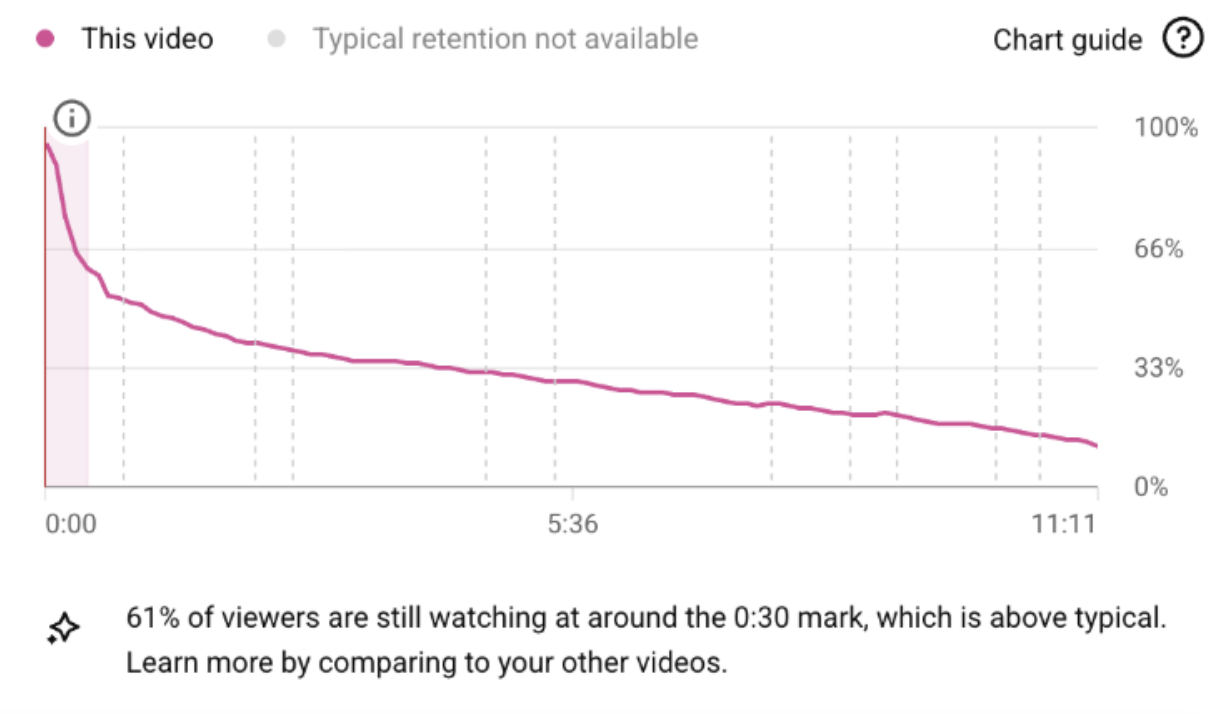
To do this, make sure to look for where in your video people are ending their session, what sections people are skipping through, and what sections people are rewatching. This can be found in the Audience Retention graph on the Engagement page, in YouTube studio. Significant dips in your graph signify that many viewers dropped around that point of your video, whilst spikes signify that people may be going to rewatch that section (similarly small dips and then a peak signify people are skipping that section).
The watch behaviour of viewers is shown in the graph below, and we can see that there is often a significant dip in the first 30 seconds. However, many viewers continue watching to at least halfway. You can see small dips and peaks throughout the timeline which signify that viewers have rewatched and skipped certain points.
Average View Duration
The Average View Duration (AVD) is measured by the length of time a viewer spends watching one of your YouTube videos. The AVD is worked out by dividing The Total Watch Time by the Total Number of Views. It is key to remember though that although this is the ‘average’ time, there will also be people who have watched the entire video and some that only watched a few seconds of it. These are the outliers and therefore will affect the AVD, for example if someone watches a 15 minute video for 30 seconds the AVD will drop.
An important part of this is considering the time your viewer clicks on your video up to when they leave YouTube, this is known as the Session Time. YouTube’s aim is to maximise every viewer's session time. As a result, the algorithm will recommend the videos that encourage a long, engaged journey tailored to each viewer's watch behaviour.
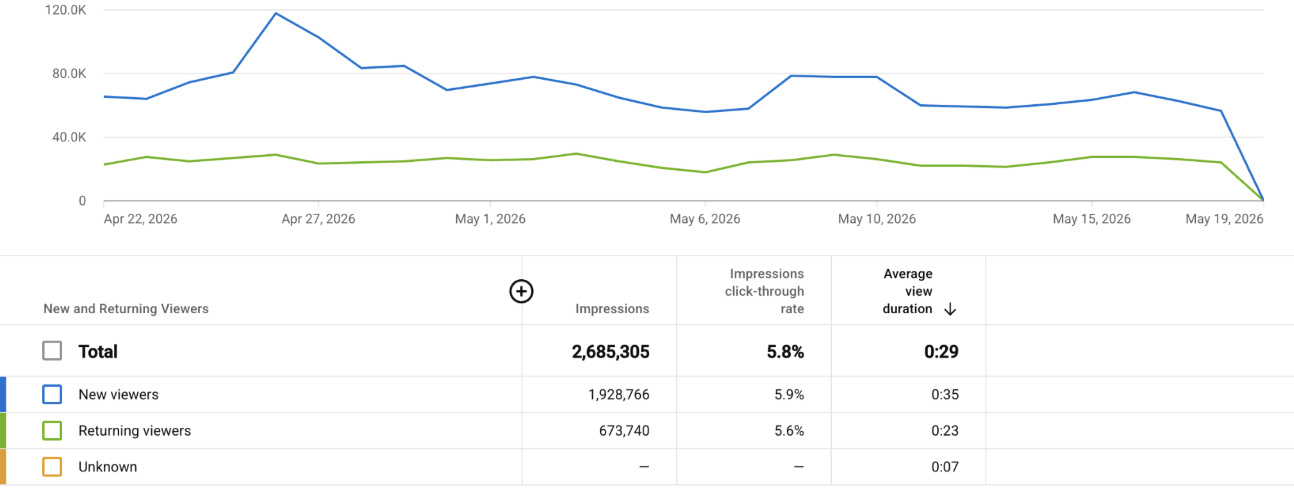
You should also consider whether viewers are new or returning as this can affect your AVD. Your subscribers are more likely to watch for longer as they know who you are and have an interest in your content. Whereas new viewers don’t know you, or your content, so the average watch behaviour will vary. You can read into this by checking your Watch Time Analytics in the Advanced Mode section of YouTube Studio and comparing AVD with New and Returning Viewers.
Why does Average View Duration matter on YouTube?
For your brand, it is key to consider this because it is an indicator of viewer engagement in your content. A high view duration on your video tells YouTube that your content is valuable and high quality. It also says the Title/Thumbnail isn’t misleading (the video does what it says on the tin) and holds viewer attention for an elongated period.
The long viewer sessions add up to a larger watch time overall which results in the algorithm recommending your content to a wider audience. You can see it as YouTube rewarding you for your hard work in making engaging content. You can use this information to your advantage by identifying which videos have longer view durations and which don’t to see what content your audience enjoys. This can then aid you in what content you should look to produce in the future.
When you are looking to increase the AVD, early engagement is vital to longer viewer sessions. The first 30 seconds (around 5 seconds on shorts) need to hook your audience, so make sure to include intriguing questions, visuals or summaries at the beginning of your longer form content. This will give your audience a sneak peek at what’s to come later and hook them in from the start.
YouTube Video Click-Through Rate
Your YouTube Click Through Rate (CTR) is the percentage of viewers who click on your video after seeing it in their feed. The key factors to increase your Click-Through Rate are your videos Title and Thumbnail. Let me introduce you to a new phrase, YouTube packaging. This is the thumbnail and title power duo, when done well the two work together to increase clicks and attract your audience. The CTR measures what brings in your viewers aka… how well “YouTube Packaging” works, how your brand entices viewers into watching new content.
This YouTube packaging is key to increasing clicks. Thumbnails are there to hook people in with the enticing imagery and a Title gives context to what the viewer will be watching. Together they boost SEO because when done well, your high CTR tells the YouTube algorithm that your video is relevant and engaging for that specific subject.
SEO is optimised when your keyword filled title gets your video seen, then your thumbnail gets your video clicked, and your content will get you ranked highly in the algorithm.
For a deeper look at how to optimise both of these, see our guides on how to create a good thumbnail that gets clicks and how to write the perfect YouTube title.
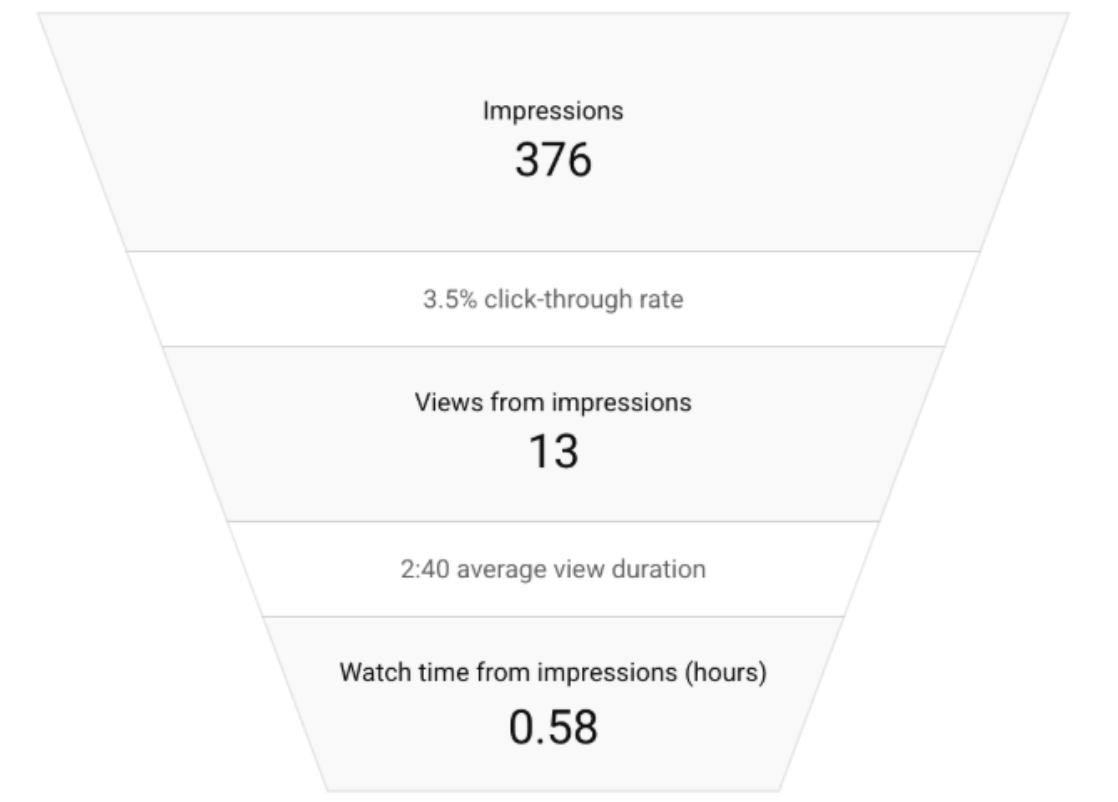
How to improve your Click-Through rate on YouTube?
To get more clicks on YouTube you need to optimsie your “Packaging” by testing different thumbnail and title combinations on your channel to see which have the highest CTR. On YouTube you are able to use the A/B testing feature to compare up to three titles/thumbnails combinations. YouTube will push out your videos with each combination to an equal amount of people, then test which combination does the best. This can be useful when testing new YouTube packaging templates and video series on your channel.
The duo needs to complement each other not imitate, so make sure that the Thumbnail doesn’t say the exact same as the title but highlight the key words and faces/places/items that viewers may be interested in. The title, thumbnail and video layout should all be aligned to encourage longer session times. The video must prove that your Packaging is not just clickbait.
For a deeper look at how to optimise both of these, see our guides on how to create a good thumbnail that gets clicks and how to write the perfect YouTube title.
YouTube Traffic Sources
Your traffic source refers to the platform or method through which viewers can find your videos. Traffic can come from several sources, for example: Browse Features; Suggested videos; YouTube Search; External; Channel pages; and Playlists. Looking into where your traffic is coming from, can help you determine how your audience finds your videos. By determining where your audience is coming from you can investigate how to optimise your videos to reach them and increase your chances of being recommended to more viewers.
Often channels with large audience numbers have viewers from around the world, in which case you may want your content to reach multiple regions/languages. Here is where localised content may come in handy. Creating/optimising content for multiple languages all within the same channel can optimise the reach of your audience. As well as increase customer engagement and trust in your brand.
When looking at this YouTube metric it’s important to consider how and why viewers are finding your content. If a large percentage of your traffic is coming from YouTube Search that indicates that your Title, thumbnail and metadata are working effectively to rank you in the algorithm. Getting to grips with where your traffic is coming from can support the development of both your content and your strategy.
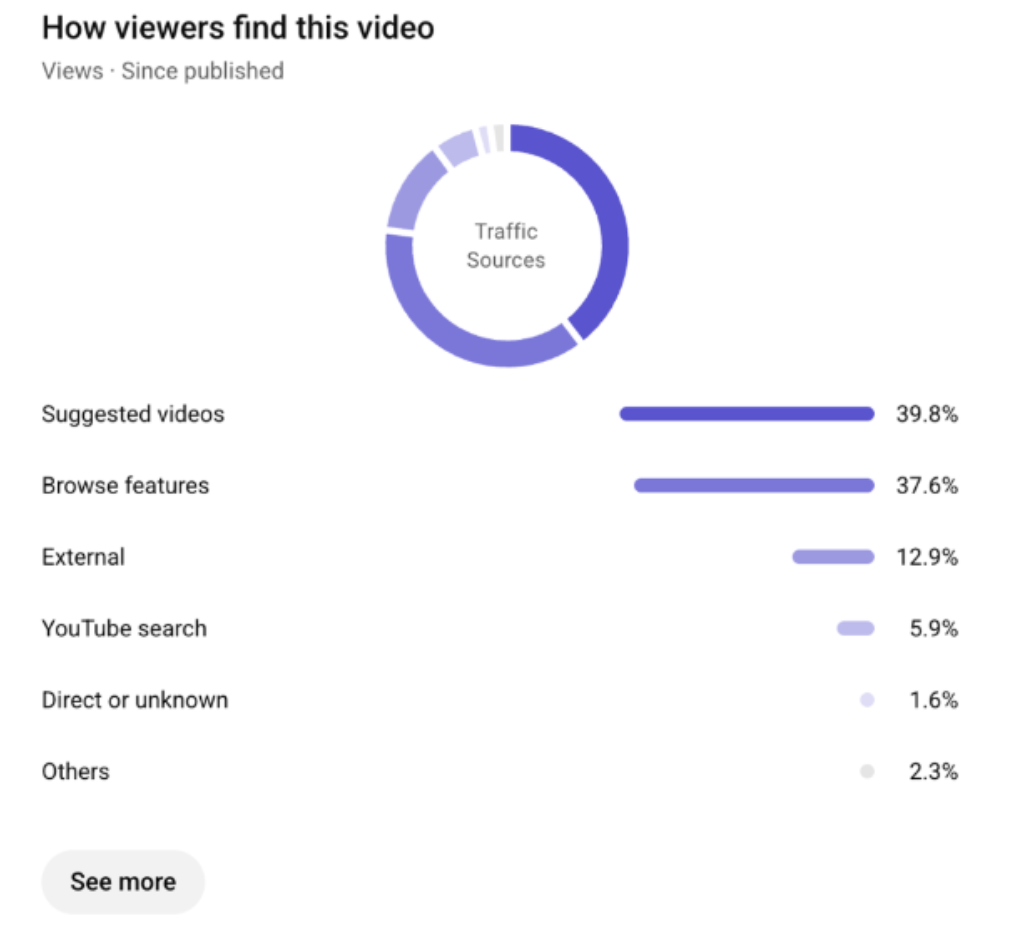
How to increase your traffic sources?
Boosting traffic to your YouTube videos starts with smart SEO and GEO optimisation. Pair that with high-quality, entertaining videos and as a result viewers are more likely to watch for longer, interact with your content, and share it with others. All of which can help increase your visibility on the platform. Using relevant keywords in your video titles, descriptions, and tags helps YouTube understand your content and show it to the right audience in search results.
Finally, don’t underestimate the power of community. Replying to comments, asking viewers questions, and encouraging feedback helps build loyal followers who are more likely to return for future videos - and recommend your channel to others. The more connected your audience feels, the more your channel can grow organically over time.
Conclusion
Understanding these five metrics: Action Rate, Audience Retention, Average View Duration, Click-Through Rate, and Traffic Source, gives your brand a well-rounded picture of how your content is performing and where there's room to grow. Each one tells a different part of the story, but together they paint a clear picture of what's working, what isn't, and what your audience actually wants to see.
The most important thing to remember is that these metrics aren't just numbers, they're customer feedback. They reflect how real viewers are responding to your content, and using that information to inform your future strategy is what separates brands that struggle from those that consistently grow on YouTube.
YouTube in 2026 rewards content that is honest, engaging, and built with the viewer in mind. So keep experimenting, keep analysing, and most importantly, keep creating. The algorithm is always evolving, but a genuine connection with your audience will always be worth investing in.
Want to know more about how to rank in the YouTube algorithm in 2026? Check out our guide on modern YouTube best practices for brands.
YouTube Metrics Frequently Asked Questions:
How often should you review YouTube metrics?
At a minimum, reviewing your metrics after each video upload is recommended. However, for if you’re just starting out, a monthly review of your overall channel performance will help you identify broader trends and adjust your content strategy accordingly.
Which YouTube metrics should I focus on?
If you're just starting out, Click-Through Rate and Audience Retention are the best places to begin. CTR tells you whether your YouTube Packaging is compelling enough to get clicks, and Audience Retention tells you whether your content is delivering on that promise.
Do metrics work differently for YouTube Shorts vs long-form content?
Yes, there are some key differences. Shorts have their own analytics ecosystem, and YouTube metrics like AVD and Audience Retention behave differently as a result of their fast-paced nature. For Shorts, engagement rate and repeat views carry particular weight. It's best to analyse your Shorts and long-form content separately rather than comparing them directly.
How would my brand get more views on YouTube in 2026?
Getting more views on YouTube in 2026 starts with understanding the key YouTube metrics. Strong performance across signals to YouTube that your content is worth recommending to wider audiences.