TL;DR
The wellness economy hit a record 6.8 trillion dollars in 2024 and is forecast to reach 9.8 trillion dollars by 2029, growing faster than global GDP. Eighty-four percent of consumers now call wellness a top or important priority, yet only 13% say they're achieving their wellness goals. That gap is where your brand's content lives.
YouTube has quietly become the living room. It captured 12.7% of all US TV viewing time in December 2025, more than any other platform, and over 150 million Americans now watch it on a connected TV every month. This is not the same platform your brand built a strategy for five years ago.
Wellness content on YouTube saw a 259% increase in views from December 2025 to January 2026, but most wellness brands still barely register there. Brands have historically captured a tiny fraction of category views, with creators doing the heavy lifting. That's the opportunity for your brand to stand out.
The most resilient brands treat YouTube as a publishing platform, not a media buy. Owned, expert-led content that compounds over years, long after the campaign budget runs out.
If you lead marketing for a wellness brand, you already know the category is crowded. Supplement brands, fitness platforms, sleep tech, mindfulness apps, and skincare brands are all competing for the same searches and the same feeds. Wellness is one of the few categories where trust has to be earned before a single pound gets spent.
It's why having YouTube as part of your marketing strategy matters. YouTube sits at the meeting point of search, education, and storytelling in both long and short form. It's where people go once they've stopped scrolling and started to research. When it's a consistent part of your marketing mix, YouTube lets you show up at the exact moment someone is comparing options and deciding who to trust.
In this article we'll unpack why YouTube matters so much for wellness brands right now, how the platform has changed shape in the past year, and what the brands getting it right are doing differently.
Why YouTube Matters for Wellness Brands Right Now
YouTube is the world's second-largest search engine, with an estimated 2.7 billion monthly users worldwide. Scale alone has never been the reason brands should care though. Intent is.
When someone searches "best fitness routine," "how to build a beginner strength routine," or "what is the best gymwear," they're doing more than just browsing. They're trying to make a decision about their own body or mind, and they want a source they can trust. More than 65% of shoppers already use YouTube to help make a purchase decision, and searches for health and wellness content have climbed sharply in recent years.
Wellness is a high-consideration purchase, and that behaviour follows from it. People rarely buy a supplement or a sleep aid on impulse. They want to see the evidence, hear it explained, and decide the brand knows what it's talking about, which is exactly the kind of decisionvideo is built to support.
A YouTube video doesn't disappear when the spend stops. A well-made explainer on sleep hygiene or protein can keep earning organic views for years, resurfacing every time someone new runs that search. This is important for wellness brands, where trust builds slowly and rarely from a single touchpoint.
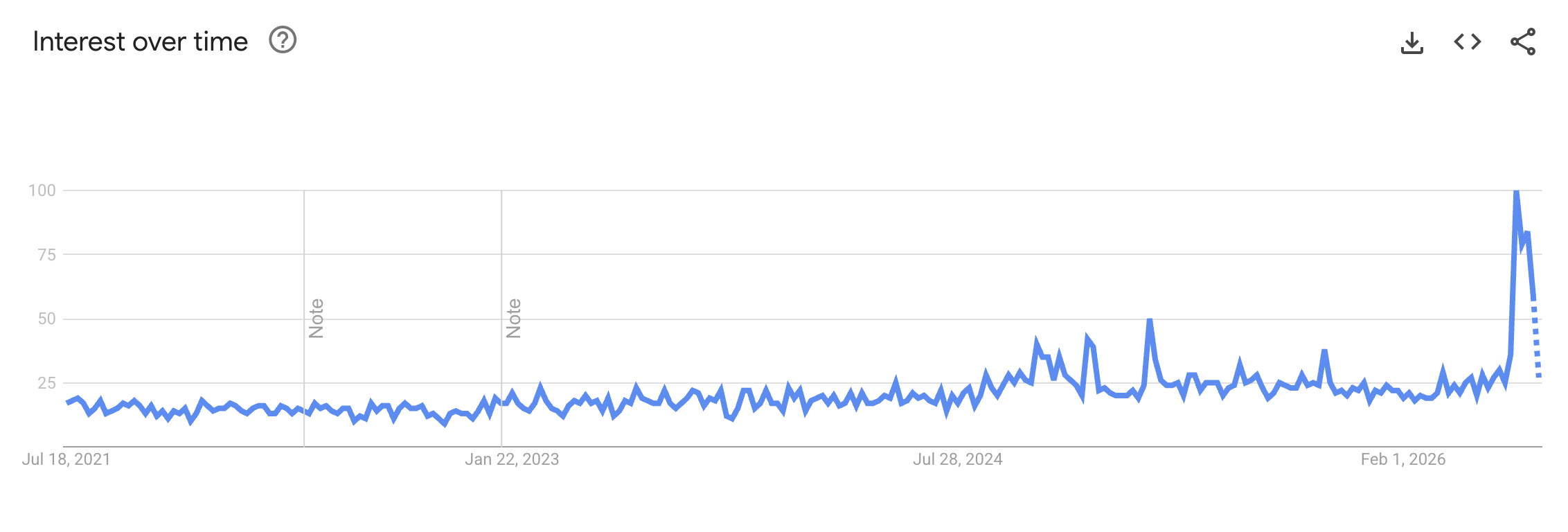
Google Trends data highlighting the growth of Fitness Routine searches on YouTube in the last five years
The Gap Between Wellness Demand and Wellness Content
Wellness content on YouTube saw a 259% increase in views from December 2025 to January 2026, and brands that lifted their posting frequency to two or three times a week saw an average of 137,000 views per video with 77% retention, according to Dash Social's latest benchmarking. That surge in demand had to go somewhere, and it mostly went to creators, who publish natively and consistently while most brands still treat YouTube as a place to drop the occasional campaign film.
It's a pattern that isn't new. Pixability's long-running beauty research found brands capture as little as 3% of category views on YouTube, with creators and vloggers dominating the conversation. Wellness looks similar today. Branded content grew 54% year on year, but it has been easier for a brand to spend 10 million dollars on TikTok than one million on YouTube, which leaves a wide gap to move into. Part of that comes down to how the two platforms feel to a marketer. TikTok can be fast, and easy to switch off. A YouTube channel reads as a longer publishing commitment, which is harder to greenlight.
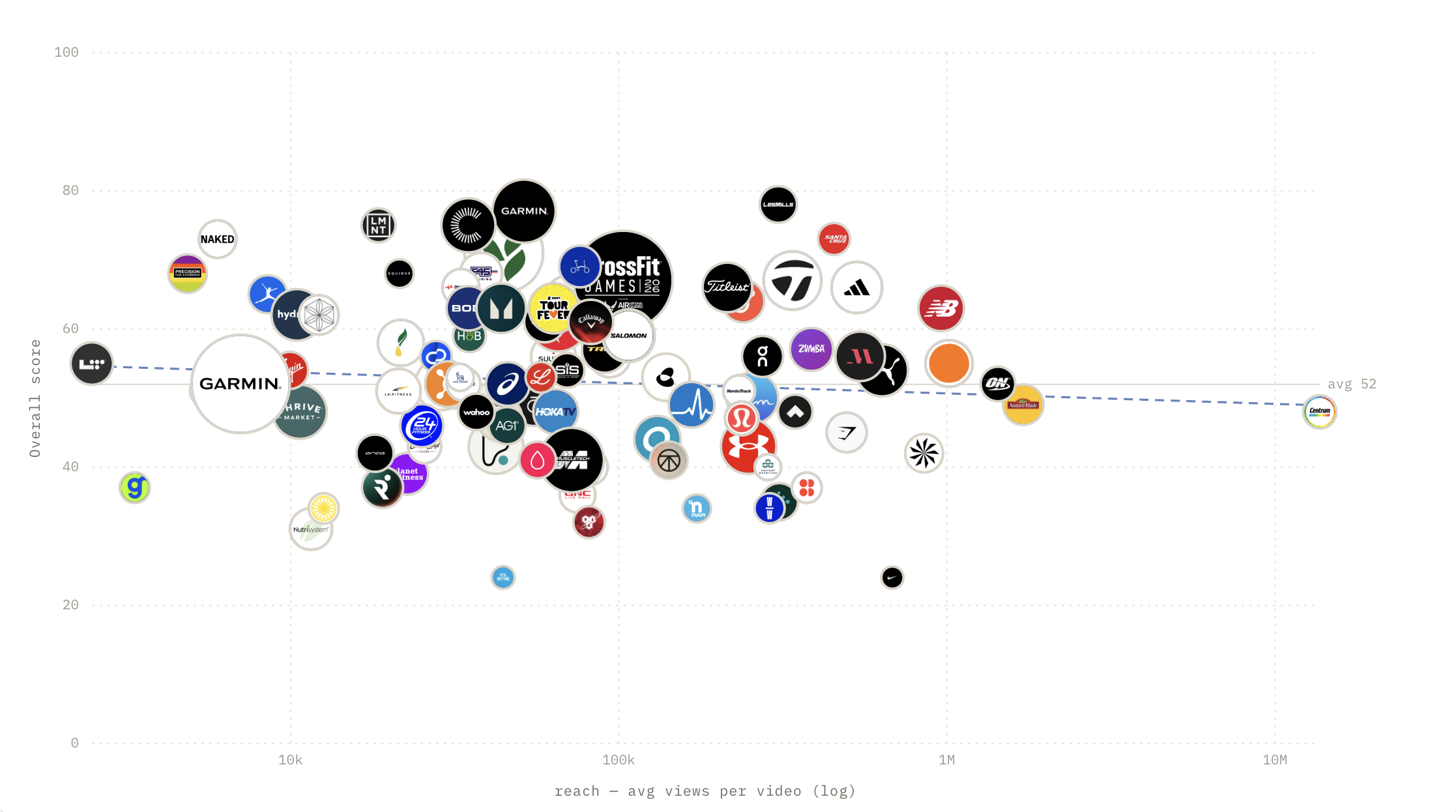
Navigate Video YouTube analysis of 100 wellness brands. Overall score against reach.
The gap shows up in how much wellness brands publish, and just as much in how they run the channels they already have. In our own analysis of 100 wellness brand YouTube channels most were leaving the basics of discovery and engagement undone:
87% never pin a comment, and 58% never reply to one, so the conversations that build trust go unanswered
68% never customise a shelf title, leaving the homepage to organise itself
51% add tags to fewer than half their videos, and 34% tag none at all, which makes their content harder to surface
45% use no timestamps in any description, so longer videos are harder to navigate
20% publish no Shorts at all, skipping one of the main ways new viewers find a channel
9% have no channel trailer to turn a first-time visitor into a subscriber
None of these are hard to fix, which is what makes the opportunity so open. But, there's a reason they go undone, and it isn't skill or effort. Wellness is one of the most creator-led categories on YouTube, so brand money tends to follow creators into partnerships and podcast sponsorships. The owned channel ends up as a place to park campaign films rather than something a team runs day to day. Nobody quite owns it as a publishing operation, so the community management, the metadata, and the homepage all get left to look after themselves.
That's the gap, and it's a fixable one. The demand is proven and the audience is searching every day. What's missing, for most wellness brands, is a real owned content strategy, built the way a publisher would build one, rather than a handful of ad-funded clips.
These findings come from our own analysis of 1,000 brand channels across ten sectors. We'll share the full cross-sector picture in our Growth Gap report this September. If you want to be the first to see it make sure you’re signed up to our newsletter.
The YouTube Opportunity Across Wellness Categories
Wellness is made up of many different categories, each with its own search behaviour, its own competitive gaps, and its own commercial ceiling.
Nutrition and Supplements sits closest to YouTube's natural strengths: long-form, education-led content that builds trust before a purchase.
Fitness and Movement is the largest, most established wellness category, and also the one where creators and a handful of brand giants already dominate.
Mental Health and Mindfulness is fast-growing and structurally suited to depth, though it demands real editorial care.
Sleep and Recovery is one of the highest-search, lowest-competition categories in the whole space.
Longevity and Preventive Health is the premium tier, where audiences are knowledgeable and ready to spend.
Beauty-Wellness is the crossover category bridging skincare and gut health, powered by growing search demand and trending topics.
We'll be publishing a deeper breakdown on several of these categories over the coming months, to pinpoint exactly where the widest gap sits between what audiences and the YouTube algorithm reward and what most brands are publishing.
Examples of Wellness Brands Getting YouTube Right
A handful of brands show just how differently YouTube can be done to drive real business growth.
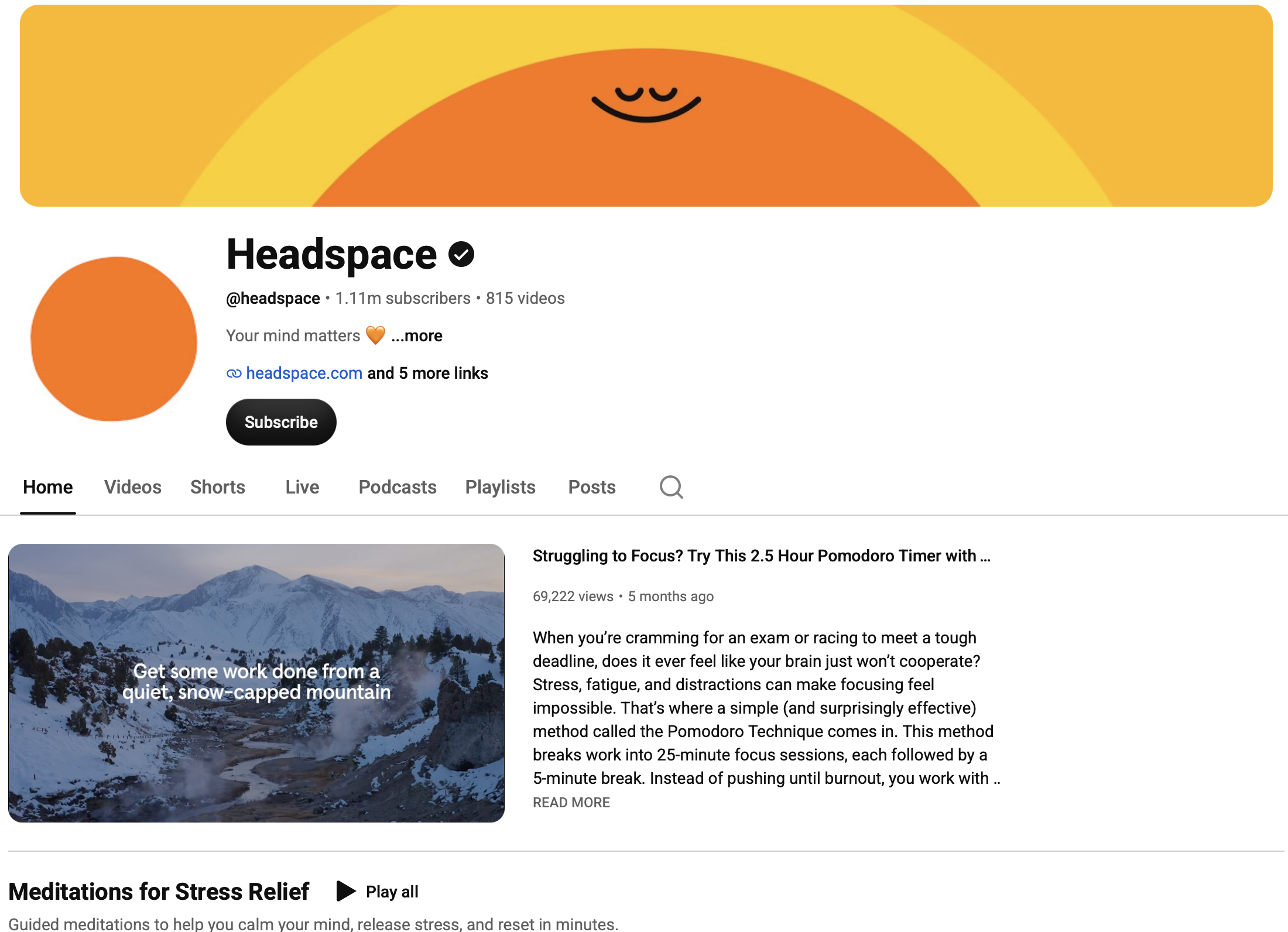
Headspace has built one of the largest owned wellness channels on YouTube, now past one million subscribers with over 800 million total views, largely through polished, animated, expert-backed guided content.
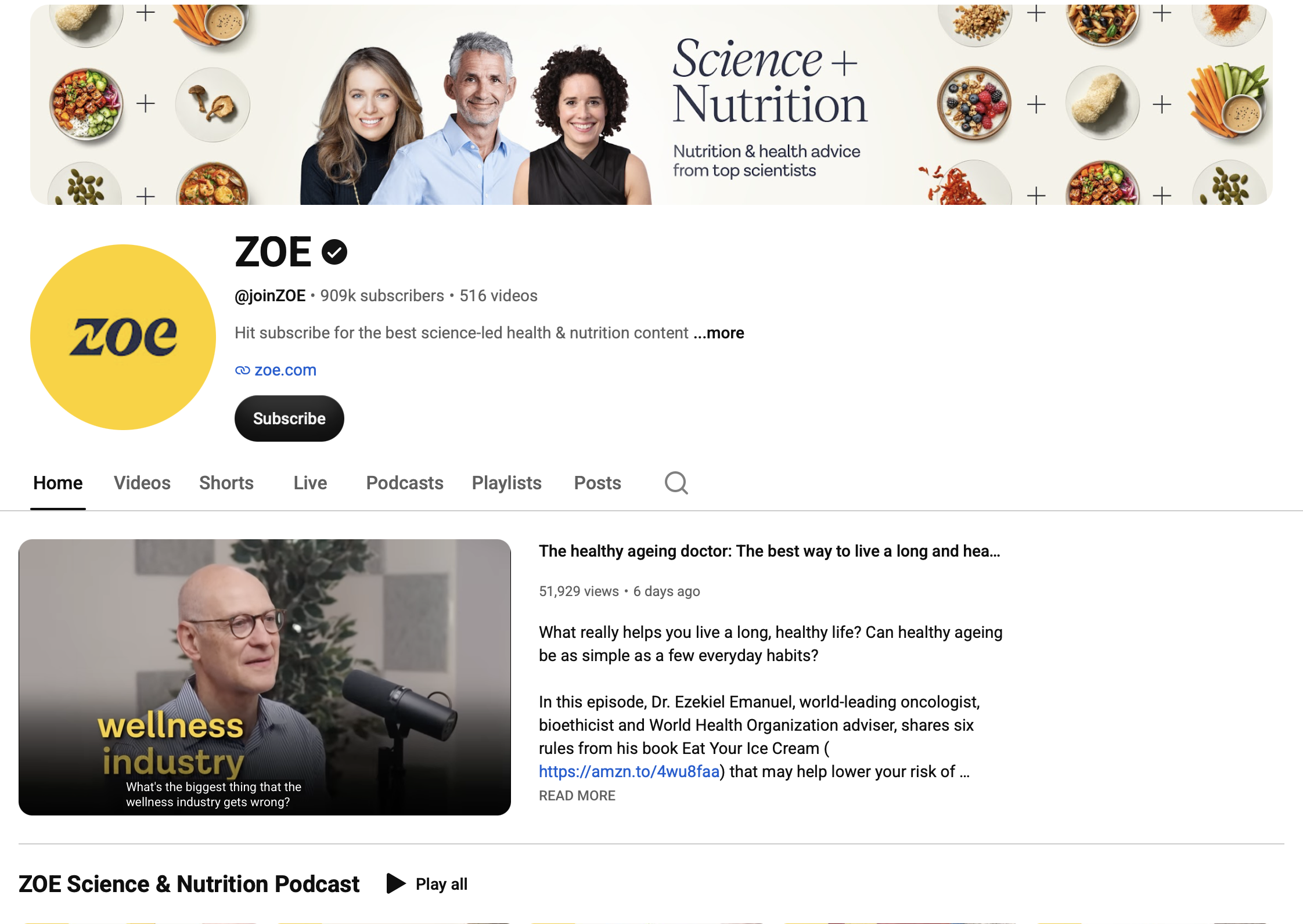
ZOE has taken a different route entirely: fewer subscribers, but a science-led interview format tied to its podcast that reaches 3.5 million people a month and establishes it as a trusted brand in its space.
There's no single right answer here. What connects every one of these brands is a deliberate choice about where YouTube sits in their marketing mix and what they want it to contribute commercially, rather than treating it as an afterthought.
The Wellness Consumer Journey on YouTube
Trust in wellness is built in stages, and YouTube maps to all of them, so you can meet your audience wherever they are.
Discovery happens when someone finds a supplement brand's ingredient explainer or a sleep brand's evidence review and registers it as credible.
Education follows as a viewer who returns to a channel two or three times has usually started forming a preference before they've looked at a product page.
Conversion happens when that trust is strong enough that the brand is the obvious choice at the moment of purchase, and your content and channel is set up to pull them through.
Advocacy comes last, when a viewer who valued the content shares it, comments on it, or joins a community around it.
The YouTube Case for Moving Now
The demand is already here, and it's growing faster than the brands trying to meet it. That's the opportunity for your brand to get ahead, because the brands that have built a proper owned presence are still the exception rather than the rule.
The brands who move now are the ones who will own the rankings, and the trust that comes with ranking there, well before the rest of the category catches up. We've seen it happen, amplifying an existing channel can turn dormant content into a real growth driver without starting from scratch.
Navigate Video is a YouTube marketing agency for global consumer brands providing full end-to-end YouTube services. If you're ready to build a strategic, high-performing presence on YouTube, let's talk.
Frequently Asked Questions
Is YouTube worth it for wellness brands, or is it better to work with creators?
It's rarely one or the other. Creator partnerships build reach quickly, and they're a big reason wellness content has grown so fast. An owned channel gives your audience a clear next step, holds the trust and ranks long after a partnership ends.
How often should a wellness brand post on YouTube?
There's no magic number; what matters is consistency the algorithm can rely on and content built around what your audience is searching for.
Which wellness category has the biggest opportunity on YouTube?
The biggest opportunity is wherever the gap between search demand and brand publishing is widest for your specific category, which is what we help brands pinpoint.
How do you measure whether YouTube is working for a wellness brand?
Views and subscribers tell you the channel is busy, not whether it's contributing to commercial growth. The measures worth watching are reach and new-viewer growth, retention, the search demand you're capturing, and signals like branded search and site traffic that connect YouTube to brand growth.
How long before a wellness brand sees results on YouTube?
YouTube rewards patience. Because well-optimised content keeps resurfacing in search, a video published now can still be earning views and building trust a year later.