How Does the YouTube Shorts Algorithm Work? A 2026 Guide for Brands
TL; DR
The YouTube Shorts algorithm is a separate system from long-form. With long-form, viewers choose to stay based on the thumbnail and title, and watch time takes over from there. With Shorts, viewers scroll until something stops them, so different signals decide what gets pushed further.
The moment that matters most is the first one to two seconds. Swipe-away rate, completion rate and loop rate carry far more weight than tags or upload time.
YouTube changed how Shorts views are counted in March 2025. Every play or replay now counts as a view, so raw view counts have climbed while engagement ratios look lower on paper. Track engaged views, not just views, when you report on performance.
Shorts are averaging over 200 billion daily views, and the large majority of those views come from people who don't subscribe to the channel, making Shorts one of the biggest discovery engines on the platform right now.
If you've read our guide on how the YouTube algorithm works, you'll know YouTube runs on more than one recommendation system. Shorts is the one that's changed the most, and the one most brands still aren't getting the full value from.
If you're already using YouTube Shorts, you've probably felt this yourself. A Short takes off with no warning, or a video you were sure would land barely gets seen. It can feel like guesswork. It isn't. It's just a different set of rules, and once you understand them, Shorts becomes a genuinely good way to get your brand in front of people who've never heard of you.
In this guide, we'll break down how the YouTube Shorts algorithm works, what changed with Shorts tracking in 2025, and how your brand can use it to grow discovery and drive commercial growth in 2026.
Why YouTube Shorts Run on a Different Algorithm to Long-Form Content
Long-form YouTube is built around intent. Someone searches, sees a thumbnail and title, weighs it up against everything else in their feed, and decides to press play. That decision is what YouTube's long-form system is built to predict and reward; alongside how long people stay once they've clicked.
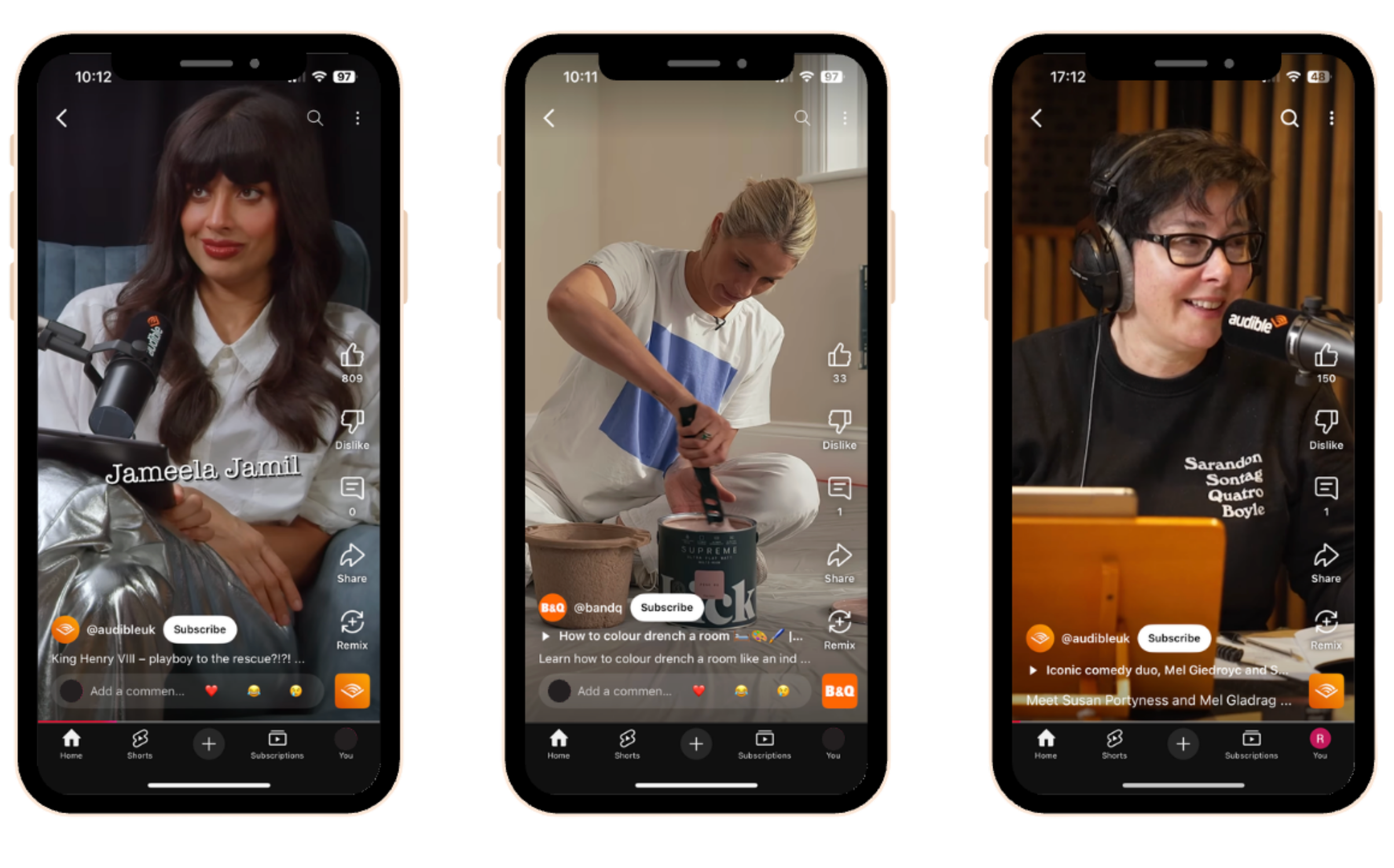
Shorts mostly works the other way round. Shorts can still surface in search and on your channel page, but that's not how most people come across them. Far more often, someone opens the Shorts feed and content simply starts playing, and their only real choice is whether to stay or scroll on. That difference in behaviour is why the two run as separate systems. How your Shorts perform doesn't directly change how your long-form content gets recommended, and a Short doing well won't automatically pull viewers into your long-form videos on its own. What it can do is put your brand in front of new people, and from there you can deliberately guide interested viewers toward your longer content, which we'll come to below. Both formats play their own part in getting your brand discovered.
The Signals That Drive the YouTube Shorts Algorithm
Once you know the algorithm is reacting to scroll behaviour rather than a considered click, the ranking signals make a lot more sense. Here's what decides how far your Short gets pushed:
Swipe-away rate in the first one to two seconds
This is the closest thing Shorts has to a bounce rate. If people swipe away before your video has said anything, it tells the algorithm your content isn't earning its place, no matter how good the rest of it is.
Completion rate
Shorts that get watched all the way through get shown to more people. This is the single biggest reason to keep your Shorts tight and edited hard.
Loop and replay rate
A rewatch is a strong signal your content is landing with your audience. A clean loop, where the end flows straight back into the start, keeps people watching without them even clocking they've seen it twice.
Engagement
Likes, comments and shares help, but completion rate is a stronger signal for the Shorts algorithm. If asking for engagement causes viewers to swipe away before finishing, it can hurt performance more than the extra likes or comments help.
Viewer satisfaction
YouTube has moved toward weighing whether a view felt worth someone's time, not just how many seconds they stayed. It's a softer signal, but it's there in how content gets rewarded over time.
Metadata matters far less for YouTube Shorts. Titles and descriptions still help you appear in search, but tags carry very little weight. Custom thumbnails matter on your channel page and in search but count for much less inside the swipe feed itself. Upload timing isn't a ranking factor either. Whilst it’s good to know when your audience is active, a well-made Short can be rediscovered and pushed out weeks after you post it, based purely on how people respond to it.
The View-Count Change Every Brand Needs to Know About
In March 2025, YouTube changed how it counts a Short as a view. A view now registers the moment a Short starts to play or replays, with no minimum watch time required, bringing YouTube in line with how TikTok and Instagram Reels count views.
The result is raw view counts have gone up across the board, while engagement ratios can look weaker by comparison, purely because the maths behind the headline number has changed. The old, stricter definition still exists as engaged views inside YouTube Analytics' advanced mode, and it's engaged views, not the new headline figure, that determine YouTube Partner Program eligibility and ad revenue share.
For your reporting, this matters more than it sounds. Don't compare Shorts performance before and after March 2025 without flagging the change to whoever's reading the report. And when you're judging whether a Short actually worked, look at engaged views, average view duration, subscribers gained and any downstream action, rather than the total view count on its own.
Why Shorts Should Be Central to Your YouTube Discovery Strategy
YouTube Shorts is now averaging over 200 billion daily views, up sharply from around 70 billion in March 2024. Whilst this is impacted by the new system of measuring views, for your brand strategy it’s worth knowing that most Shorts views come from people who don't subscribe to a channel. That makes Shorts one of the platform's biggest discovery surfaces, and an opportunity to put your brand in front of an audience that long-form alone won't reach.
Agencies have noticed. In Pixability's fifth annual Global Agency Study, 67% of agencies said they plan to use Shorts in 2026, up from 50% the year before. That's tells you where attention, and budget, is heading.
How Your Brand Can Win with YouTube Shorts in 2026
Build for Shorts, don't repurpose into it
Native Shorts content built specifically for the format against resized versions of existing content gives your content a better chance of success. A Google Brand Lift Studies found in one campaign, ad recall lifted from a 3% baseline to 9% when they switched to content made natively for Shorts. The same work found that 47% of YouTube Shorts users aren't on TikTok at all, which makes Shorts an incremental audience for your brand rather than a duplicate one.
Earn attention in the first two seconds
This is where most brand Shorts lose their audience. Open on the outcome, the reaction or the visual, not on a logo, a brand intro or a slow build. You have less time than you think to earn the scroll forward.
Keep it tight
YouTube now allows uploads up to three minutes, but longer only works when the concept genuinely needs the time. Keep your videos concise and to the point to keep your audiences attention.
Use licensed audio properly
Add trending sound inside the YouTube app after you upload, rather than baking it into your edit beforehand. Audio added afterward through YouTube's own library is licensed for use, while audio embedded during editing in a separate tool can trigger a content claim. Trending tracks in the Shorts library are only licensed for videos of 60 seconds or less, so if you're using trending audio, stay under that mark. Brand and business channels are also generally limited to YouTube's Commercial Music Library rather than the full trending catalogue.
Post consistently, not constantly
There's no proven benefit to posting at a specific time of day. What does help is a steady, sustainable cadence your team can actually maintain, built around ideas that earn a place in someone's feed rather than filling a schedule.
Connect Shorts back to your channel
Because the two systems run separately, a strong Short won't funnel people into your long-form content on its own. You have to build the bridge yourself. Add a related long-form video link to every Short you post, and use on-screen prompts to guide genuinely interested viewers deeper into your channel.
If you want a deeper breakdown of formats, specs and editing best practice, our guide to YouTube Shorts covers the fundamentals in more detail.
FAQs
How does the YouTube Shorts algorithm work?
It tests each Short with a small seed audience first, then shows it to progressively wider audiences based on how people respond, primarily swipe-away rate, completion and loop rate.
Why are my YouTube Shorts not getting views?
The most common cause is losing viewers in the first one to two seconds. Check your hook before you look at anything else.
Does posting Shorts hurt my long-form video performance?
No. The two systems run separately, so Shorts performance doesn't affect how your long-form content gets recommended.
How many Shorts should a brand post each week?
There's no fixed number that guarantees results. A consistent, sustainable cadence built on strong ideas will outperform a high volume of weak ones.
Do hashtags help YouTube Shorts get recommended?
They help YouTube categorise your content, but they carry far less weight than your hook, completion rate and engagement.
What's the best length for a YouTube Shorts video?
Fifteen to thirty seconds tends to perform best for brand content. Longer formats, up to three minutes, only work when the idea earns the extra time.
Want Shorts That Actually Get Discovered?
Getting the hook right, and getting your Shorts strategy to work alongside your long-form content, takes more than trial and error.
We've seen what a focused Shorts strategy can do: our Shorts campaign with B&Q generated 3.7 million impressions and a 76% average view rate across a 12-week trial.
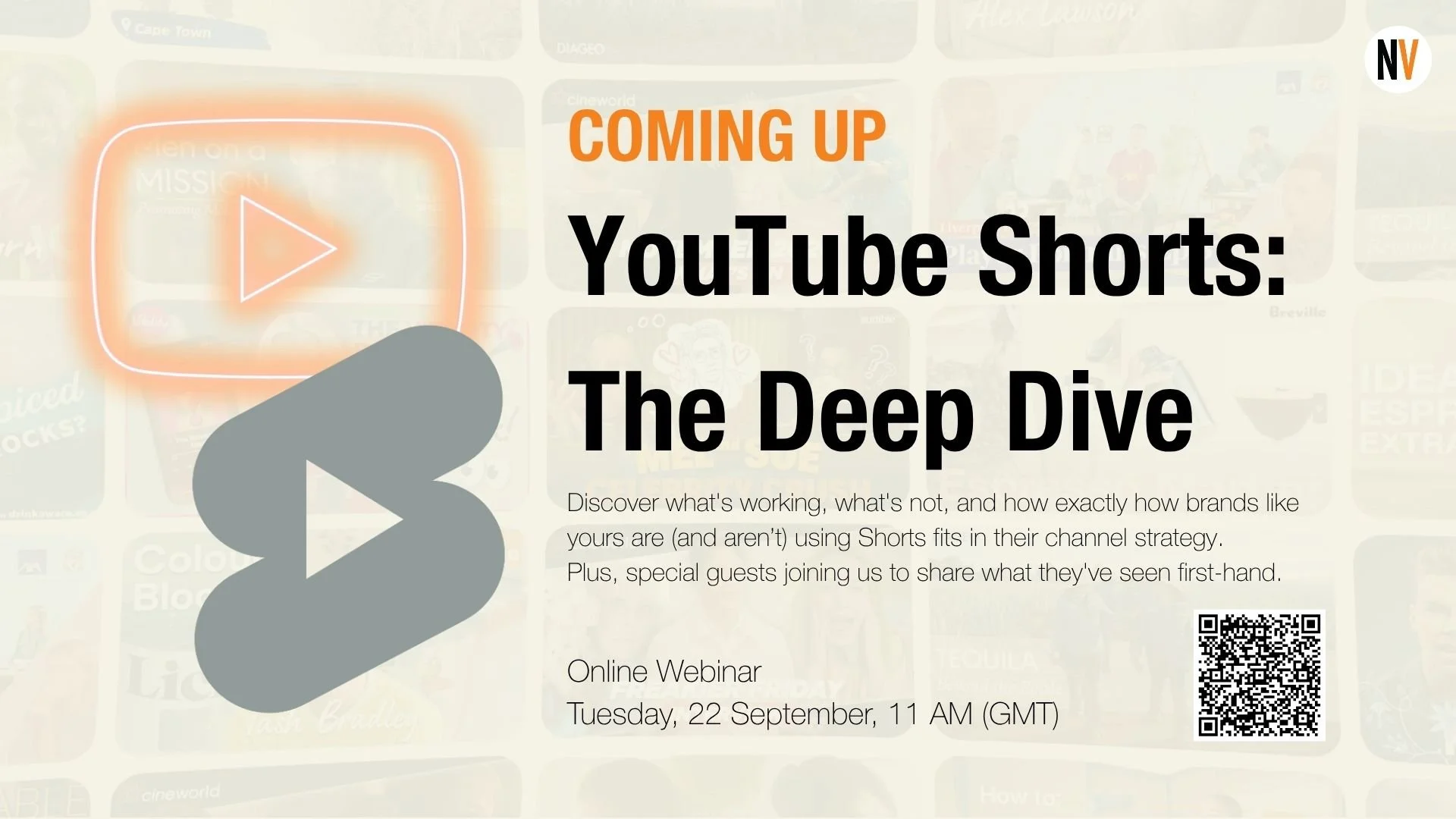
We're going deeper on all of this at our September webinar, YouTube Shorts: The Deep Dive, walking brands through exactly how to build a Shorts strategy that earns discovery rather than hoping for it.
Get in touch and let's build a Shorts strategy that works for your brand.